How To Improve Change Adoption For Large Frontline Teams
Change fails at the last mile. Here’s how ops leaders improve change adoption across 1,000+ frontline employees.


From Initiative To Execution: How To Make Change Real For 1000+ Frontline Employees
You’ve spent months building the strategy. You’ve invested in the plan. Sponsors are aligned, the rollout is launched, and yet change adoption stalls on the frontline.
If you’ve led change in a large, complex organization, this isn’t a surprise. It’s the norm. Despite careful planning, change often breaks down during execution. Especially when it needs to reach 1,000+ employees across shifts, sites, and systems.
To make change real at scale, ops leaders need more than a top-down rollout. They need systems that make change sticky in the day-to-day lives of frontline teams.
Why Change Adoption Fails In The Last Mile
Enterprise change initiatives rarely fail because the strategy was flawed. Change fails in the “last mile.” In other words, it fails when the big idea has to translate into consistent action on the floor.
This translation layer includes middle managers, site leaders, team leads, and supervisors for organizations with thousands of frontline employees. And unless each tier is equipped to communicate change clearly and consistently, the change message dilutes fast.
Remember the grade school game “Telephone?” One person whispers a message to the next, and it is completely distorted when the message reaches the end of the line.
That’s what happens when change rolls through multiple layers without clarity, context, or support.
- A strategic shift becomes a vague memo
- A new process becomes optional
- The “why” gets lost entirely
Change fails quietly when it becomes “just another email” or “something corporate said last month.” Without reinforcement, relevance, and repetition, even the most well-designed initiative gets muddled — just like the last person in the telephone game trying to repeat a message they never fully heard.

3 Reasons Change Breaks Down At The Frontline
Frontline teams are navigating confusion too often. Here are 3 common breakdowns that make it hard for frontline employees to adopt change, even when the strategy makes sense on paper:
1. Supervisors Aren’t Ready To Lead The Change
No one has more day-to-day influence on frontline behavior than the supervisor. Yet too often, they’re underprepared to lead change. Without clear expectations, job aids, or even a basic talking script, many team leads default to reinforcing the old way of doing things. And when supervisors are uncertain, that uncertainty trickles down, slowing adoption and weakening trust in the initiative.
2. Change Messaging Doesn’t Match The Day-To-Day Reality
Frontline work is fast-paced and outcome-driven. If a change initiative adds complexity or seems disconnected from employees' real pain points, it’s likely to be ignored or resisted.
For example, a new task management system might look efficient in a process map, but frontline teams will quietly work around the change if it adds extra steps during peak hours.
3. No Clear System For Change Feedback
Change can’t just be pushed down. Without regular check-ins, feedback loops, or two-way dialogue, frontline employees don’t feel heard, and supervisors are left guessing about what’s working and what’s not.
A Scalable Playbook To Improve Change Management For Frontline Teams
So, how can ops leaders improve change adoption across 1,000+ frontline employees, without disrupting performance? Here’s what works in high-performing, complex operations:
1. Start With 1 Team, Then Scale
Begin with a pilot team or site where you can test the change, iterate, and build credibility. Use early feedback to sharpen your messaging, adjust workflows, and identify real-world blockers before scaling.

2. Equip Frontline Leaders With ‘Change Kits’
Don’t just ask supervisors to drive change. Enable them. Provide toolkits with:
- Key messages and talking points
- Visual workflows or cheat sheets
- FAQs and scenario responses
Change kits turn passive messengers into active change agents.
3. Build A Tiered Feedback Loop
Top-down change only works when it’s paired with bottom-up insight and peer-to-peer reinforcement. That’s where a tiered feedback loop comes in.
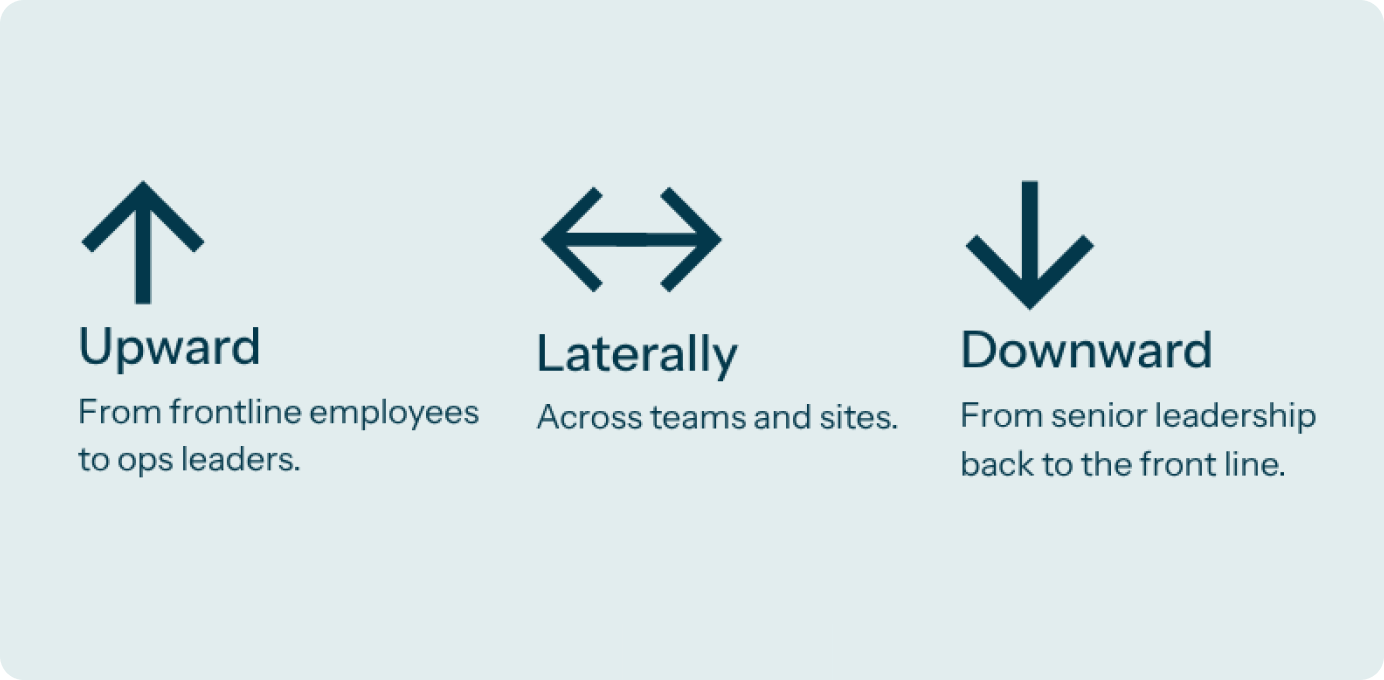
Create a consistent rhythm where information and learnings flow in all directions:
- Upward: From frontline employees to ops leaders. What’s working? What’s not landing? Regular, structured input helps you identify blind spots early.
- Laterally: Across teams and sites. Share that success story or workaround across the network when one location figures out how to make a change work. Peer insights drive trust and faster adoption.
- Downward: From senior leadership back to the front line. Close the loop by sharing how feedback was used, what’s changing as a result, and what to expect next. This builds credibility and shows frontline teams they’re being heard.
The Measurable Benefits Of Change Adoption Done Right
When change is embedded at the frontline, the results go beyond surface-level adoption. You’ll start to see meaningful shifts in how teams operate, how quickly they adapt, and how confident managers feel leading through complexity.
Here’s what success looks like in real-world operations:
- Less Confusion & Rework During Transitions: Frontline teams know what’s changing, why it matters, and how to do it. Instead of second-guessing instructions or reverting to old habits, they move forward with clarity, reducing errors, rework, and frustration.
- Faster Time To Readiness: Whether it’s a new tool, workflow, or compliance protocol, teams ramp up faster because expectations are consistent and support is built into the rollout. Clarity and structure shorten the learning curve and protect productivity during transitions.
- Consistent Adoption Across Geographies & Shifts: Change is visible and reliable across every site, shift, and vendor team. This consistency improves quality, customer experience, and confidence in your operations playbook.
- Stronger Team Engagement & Manager Confidence: Engagement rises when frontline employees feel informed and included. And when supervisors are set up to lead, they build leadership credibility, improve morale, and strengthen the management pipeline.
- A Culture Of Adaptability: Over time, frontline teams become more resilient and responsive to change. Instead of seeing change as disruption, they begin to see it as part of how the organization grows.
This is the real ROI of change that sticks: faster execution, better performance, and a stronger, more agile frontline.
Make Change A System, Not A Slogan
Change doesn’t stick because it was announced. It sticks because it was reinforced, understood, and practiced day after day, in every frontline interaction.
To improve change adoption across your frontline team, rethink how you equip the people closest to the work.
Want to see how other ops leaders are doing it?
Explore field-tested lessons from leaders who’ve improved performance and change adoption on 1,000+ person teams, without disrupting operations. Schedule a call with Pathstream today.
Ready To Make Change Stick Across Every Shift And Site?
Pathstream helps operations leaders equip frontline supervisors and teams to lead through change — turning top-down initiatives into consistent, confident execution on the floor. Build the skills, systems, and feedback loops that make change sustainable.
We offer the only off-the-clock solution that supports your business priorities and KPIs. Plus, it’s fully covered by your existing tuition assistance benefit. Backed by top-tier universities, our programs are tailored to customer contact roles and proven to improve retention. Schedule a demo to learn more.