Most Change Plans Fail Before They Hit the Floor: Prevent Change Management Failure
Support your frontline leaders with context, clear expectations, and trust to reduce the risk of change management failure.


Why do so many change initiatives fall short? Not because the strategy is flawed or the tools are broken. Change initiatives fail in the handoff, when the plan leaves the planning team and reaches the frontline, often disrupting operational stability when teams need consistency the most.
Senior leaders set the vision and design sweeping change, expecting frontline supervisors to translate, absorb, and execute. But many of these supervisors are never told the reason behind the shift. They’re handed new KPIs, tools, and workflows with limited context, unrealistic timelines, and no space to manage the impact on already stretched teams.
The cost of this disconnect? Confusion, resistance, missed metrics, and in many cases, the breakdown of the initiative due to poor change management.

Avoiding Change Management Failure Starts With The Frontline
Frontline supervisors are expected to operationalize high-level decisions, often with limited insight into the rationale or practical support to make those changes work. Even experienced leaders can’t carry the weight of change alone.
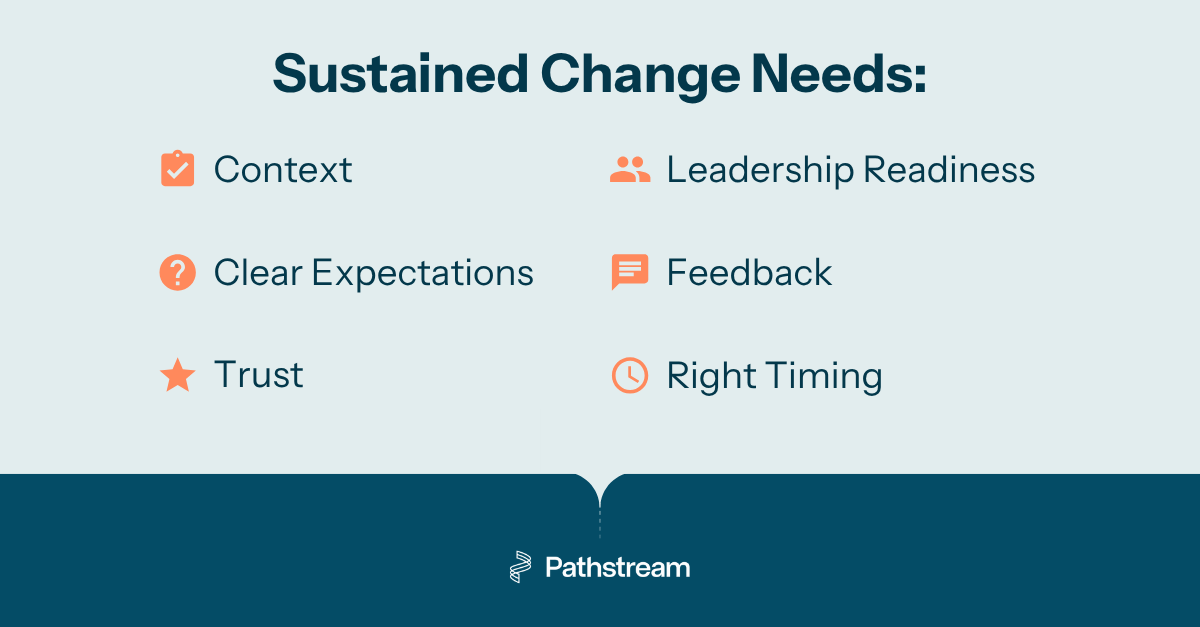
To reduce the risk of change management failure, support your frontline leaders:
- Provide Clear Context. Share the “why.” Let frontline supervisors see the strategic intent and the expected impact on their teams.
- Get The Timing Right. Avoid launching changes during peak periods or just after major organizational shifts. Allow sufficient lead time for leaders to prepare, ask questions, and plan effective communication.
- Focus On Leadership Readiness. Change fails when leaders are unprepared to lead it. Power skills to prioritize include communication, adaptability, resilience, and real-time decision making.
- Build Feedback Loops. Create mechanisms for frontline supervisors to report friction points, share early wins, and help adjust implementation based on real-world conditions.
- Prioritize Trust At The Team Level. Frontline supervisors are the face of organizational change at the frontline. If they feel unsupported or unclear, their teams will feel the same.
- Make The Change Observable. Supervisors need to know what “good” looks like. Clarify new behaviors, metrics, and expectations so they can coach toward specific outcomes.
Announcing Change Is Easy. Sustaining Change Takes Planning.
Anyone can roll out a new plan, but few organizations commit to supporting frontline leadership in advancing a new initiative.
Change management failure isn’t inevitable. But without operational support, it’s predictable. The right context and coaching can help supervisors turn disruption into direction.
Learn how to support your frontline leaders through change and drive real momentum with Pathstream. Schedule a call today.