The Frontline Leadership Tax: The Emotional Cost Of Leadership Burnout
Guard against leadership burnout by prioritizing the emotional resilience of frontline leaders.


Frontline Leadership Burnout Affects Performance At Every Level
Supervisors and team leads are often the first to absorb pressure when teams face operational demands. They manage staff issues, hit performance targets, and handle real-time challenges, all while trying to keep their teams engaged and functional.
The emotional toll adds up, especially when no one acknowledges the weight they carry. Here 3 of the most common stressors they face:
- Shielding their teams from staffing gaps, customer complaints, or system outages increases emotional strain.
- The push to hit higher metrics without extra support forces many into reactive mode.
- Burnout results in turnover, reduced coaching time, and stalled progress on key metrics.
What Happens When Burnout Spreads?
When leadership stress goes unchecked, the effects ripple outward. Team performance, morale, and customer experience all suffer.
- Turnover Creates Instability: When frontline leaders leave, their teams often lose consistency and direction. This ripple effect can lead to wider attrition across the department.
- Metrics Backslide: Burned-out leaders stop coaching and shift to firefighting. Teams begin missing targets in areas like quality and customer satisfaction.
- Team Culture Weakens: Without strong leadership, employees disengage. Attendance drops. Productivity suffers. Customers feel the impact.

What You Can Do Now To Prevent Frontline Leadership Burnout
Even small, targeted adjustments can make a measurable difference when they address the specific challenges of your frontline leaders.
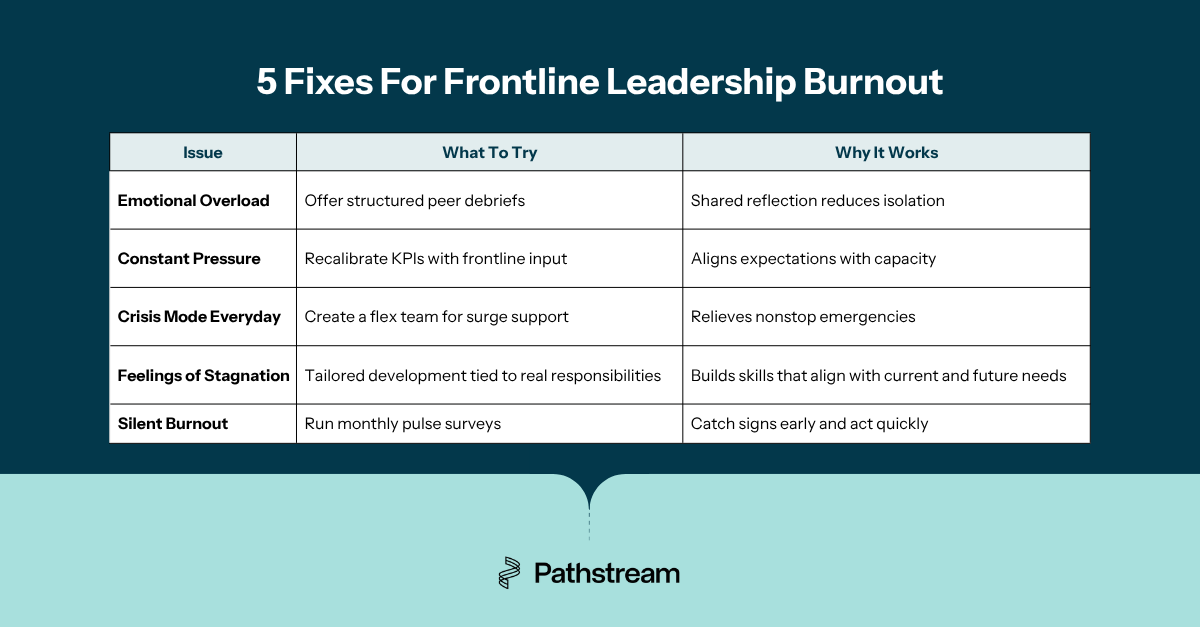
Try these fixes for frontline leadership burnout:
- Emotional Overload: Offer structured peer debriefs. Shared reflection reduces isolation.
- Constant Pressure: Recalibrate KPIs with frontline input, and you’ll align expectations with capacity.
- Crisis Mode: Create a flex team to relieve nonstop emergencies when volume surges.
- Stagnation: Offer tailored development tied to real responsibilities, and you’ll help frontline team members build skills that align with both current and future needs.
- Silent Burnout: Run monthly pulse surveys to catch early signs of burnout.
In many operations environments, small process shifts can make a clear impact. These practices don’t require major investment, but they can stabilize teams and improve outcomes when applied consistently.
Leading Well Means Supporting Frontline Leaders
If your supervisors are stretched too thin, your whole operation will feel it. You don’t need to solve everything at once. But you do need to start.
Try This Next:
- Choose one tactic, such as peer debriefs, pulse checks, or tailored development.
- Pilot it with a small group.
- Track changes to the KPI most relevant to your business.
Even modest changes can lead to meaningful results.
Protecting your frontline leaders helps your entire operation run better. When leaders feel supported, they stay, and so do their teams.
Your frontline leads are burning out. Let’s discuss how you can support them before it costs you and your team.