Regrettable Frontline Attrition Is Preventable
Frontline attrition is widely preventable. Data shows career paths, development, and supportive managers reduce turnover and raise performance.


Frontline turnover often happens for many avoidable reasons, like missing manager conversations, unclear career options, and limited support. However, research shows that frontline associate employees stay – and even improve productivity – when they can see a credible path forward.
The Cost Of Ignoring Attrition
High attrition drains performance and budgets:
- Overtime and burnout ripple across the remaining staff
- Quality, productivity, and customer satisfaction suffer
- Recruiting and onboarding expenses increase
- The percentage of fully trained employees remains low, reducing team consistency and capacity
- Frontline leaders are stretched thin, spending disproportionate time on onboarding rather than developing existing team members
In a 1,000-person frontline team, even a modest annual turnover reduction can recapture millions.
What The Data Reveals About Attrition Risk
The latest data underscores both the scale of the attrition problem and how much of it is preventable:
- Half of U.S. employees are open to new jobs, putting frontline roles at constant risk.
- 42% of exits could have been prevented if managers had acted earlier.
- 45% of departing associates had no proactive manager conversation in the 3 months before quitting.
- 77% left within 3 months of starting a search — or without searching at all, suggesting leaders have a narrow window to change outcomes.
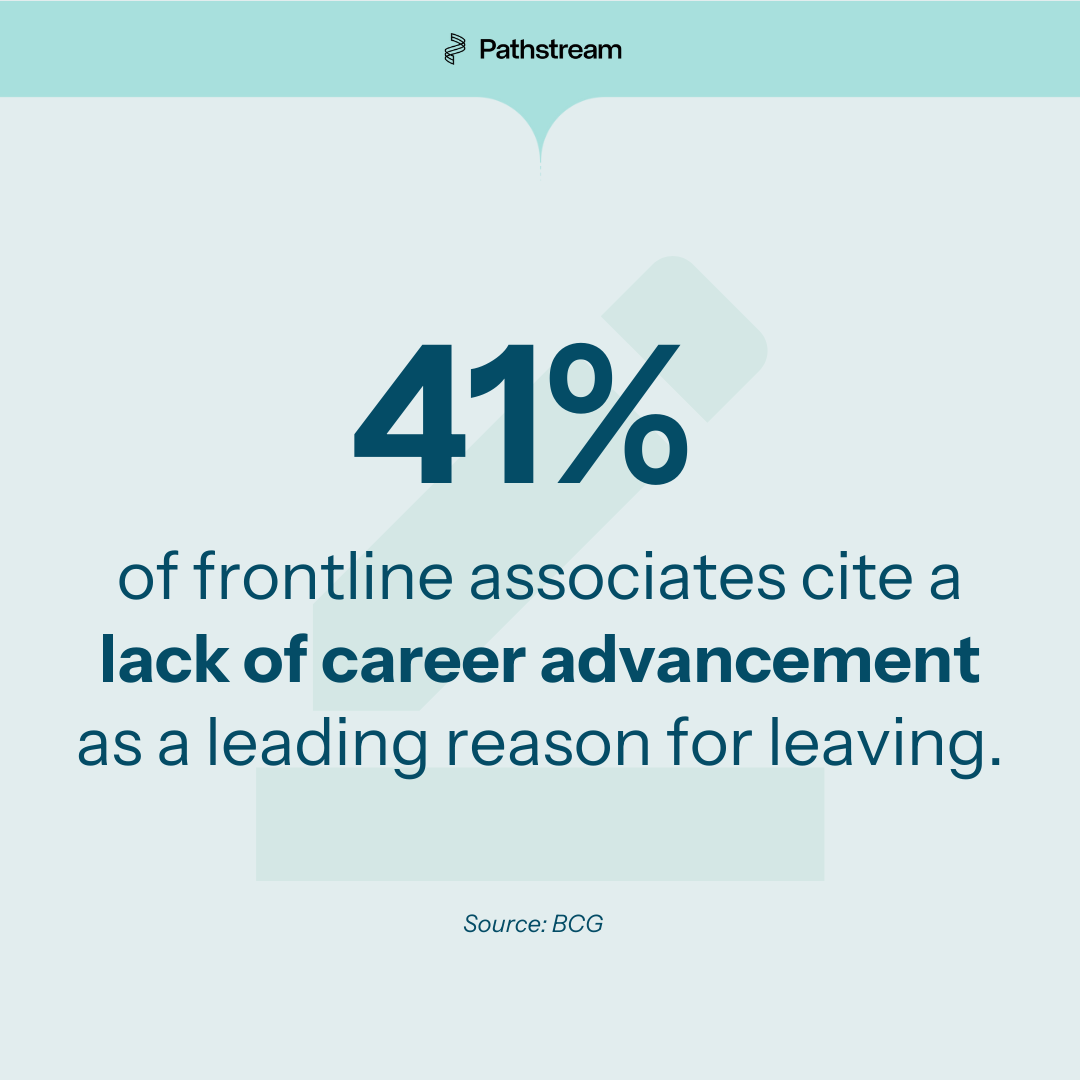
- 41% of frontline associates cite a lack of career advancement as a leading reason for leaving (second only to flexibility and work-life balance).
Meanwhile, frontline employees with frequent access to advancement opportunities are 42x more likely to be highly satisfied.
The pattern is clear: frontline attrition is not inevitable. It is strongly tied to missed conversations, unclear advancement, and weak support structures.
“Employees are loyal and want development and a clear path to career advancement.” — Harvard Business Review summary of research by Joseph Fuller and Manjari Raman (Harvard Business School)
Why Frontline Development Opportunities Are Win-Win
Investment in development pays off for both the organization and its frontline employees:
Development opportunities improve frontline satisfaction, which results in:
- Higher productivity (17% lift)
- Lower turnover (25% reduction)
- Reduced absenteeism (41% reduction)
- Improved customer experience through more capable, confident associates
Plus, development builds new skills that pay off operationally, driving gains in CSAT, first-call resolution, upselling volume, and other important metrics.
For employees, development delivers transferable skills, clearer career paths, and greater confidence. Plus, when development opportunities are available and career paths are visible, frontline associates have proof that they matter to their organizations.
Want Your Frontline To Stay Longer And Perform Better?
Pathstream programs are purpose-built for frontline roles and tailored to teams within high-opportunity industries, where associates are shifting from transactional tasks to high-value work and growing meaningful careers as AI reshapes the work.
You Set The Priorities. Pathstream Tailors The Programs.
With your executive input, Pathstream tailors simulations and 1:1 coaching to amplify behaviors that move the scorecard metrics your leaders already track, including retention.
Your organization's existing tuition reimbursement program can fund Pathstream, letting you unlock development time for your frontline teams. Learn how to get started.